

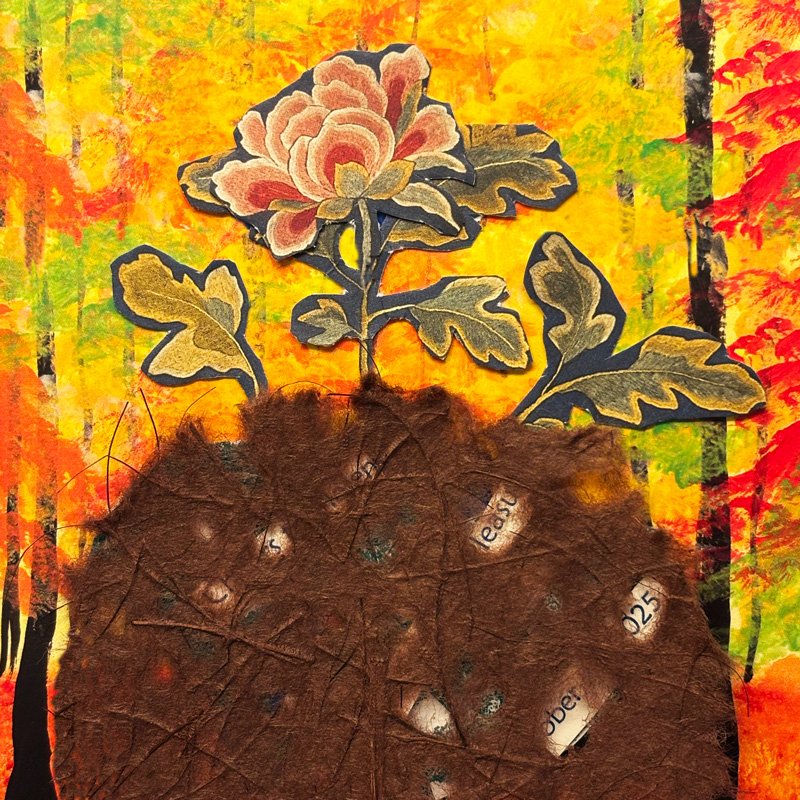
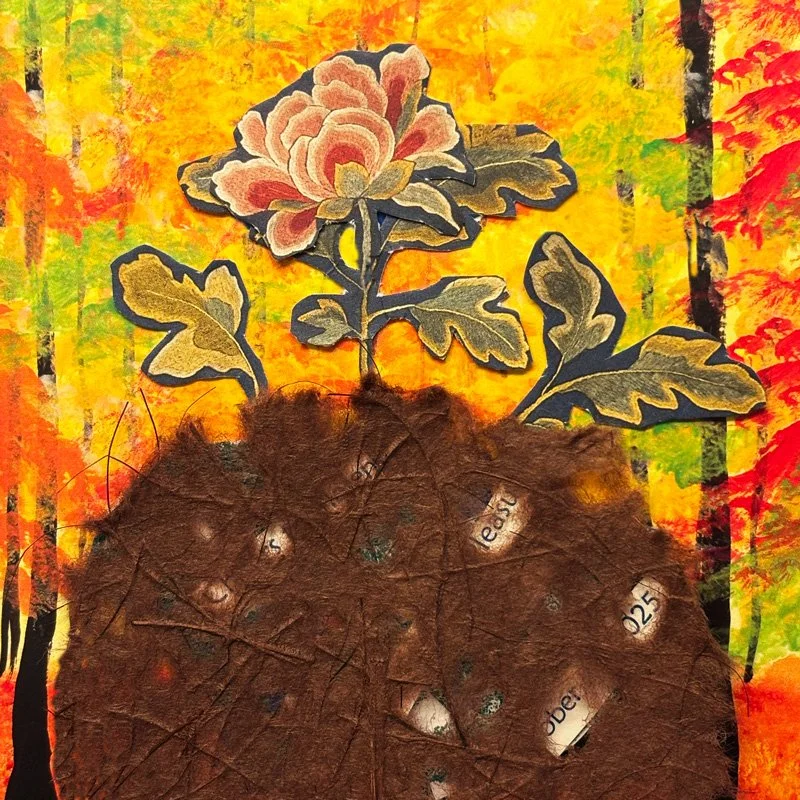
Our bodies are garbage heaps: we collect experience, and from the decomposition of the thrown-out eggshells, spinach leaves, coffee grinds, and old steak bones of our minds come nitrogen, heat, and very fertile soil.
(Natalie Goldberg)
How can we turn the decomposing garbage heaps of our own minds — to say nothing of all the other political and cultural rubbish piling up around us in the world right now! — into fertile soil for writing?
In November 2025, I invited Michael W. Moses II, an assistant professor of Higher Education and Qualitative Methods at the University of California Riverside, for a lively conversation and workshop exploring the metaphor of composting in academic, professional, and creative writing. In the first hour of this live Zoom event, Michael and I talked about how his background as a professional development coach and trained yoga instructor informs his scholarly writing on (among other topics) critical race theory, structural racism, somatic teaching and learning, and mindfulness in academic writing.
In the second hour, we ran a hands-on workshop on “Writing as Composting” for WriteSPACE members. Here is WriteSPACE Event Manager Amy Lewis’ personal account of the live event.
……………
In this Special Event, we were challenged to think about our writing in a completely new way. How do we encourage our ideas to bloom? How do we trust the timing of our own processes? And how do we keep writing through difficult times without burning out?
By becoming gardeners, of course! (Metaphorical gardeners, that is). Michael has written about composting as a way of thinking about the patience, trust, and active rest that sustainable writing requires. He explained that "Writing as composting is the conscious practice of not trying to actively work on this essay that's due on Friday for eight hours every day up until Friday. It's the conscious not-doing of that, which allows for the subconscious doing: some sentence-making in your head, and then you wake up the next morning or in the middle of the night and it’s ‘oh my God, these sentences! Let me quickly write it down.’"
Many productive academic writers know intuitively that their work continues even when they step away from the desk. But writing as composting means more than simply "taking a break." A compost heap involves three things:
Letting things rest (remember that rest can be productive!)
Turning things over and aerating them (looking at ideas from new angles and getting stuck into the writing)
Adding heat, the catalyst for creating the fertile soil (this could be your writing community or another behavioural/social aspect of your writing life).
Michael made it clear that composting isn't an excuse for avoidance. "This isn't just to say we should all goof off and have fun and watch TV and be on TikTok," he noted. "If we're having adverse reactions to the mere thought of sitting down during our writing time, that's where we need to solicit support to help us think through those behavioral responses." So composting is an active and intentional process: you consciously schedule time to work on your manuscript, and then, when you go about the rest of your day, you allow yourself to let go. You trust that life will turn over the emotions, ideas, and difficult quandaries you're working through — that they'll make sense of themselves naturally, subconsciously.
Michael came to this understanding partly through his training as a yoga instructor. Yoga, he explained, isn't really about flexibility or getting into posture; it's about how you show up in relationship to yourself and external stimuli during moments of duress. The same principle applies to writing.
I love this idea, as I think there’s something countercultural about it. Academia often rewards speed and volume, but Michael proudly identifies as “a slow academic, a slow writer.” The best writers, he says, are slow writers:
We should not want to rush the process. We should not want to skip those moments to print out our manuscript and read it out loud so we can hear the words, to make sense of how our readers may make sense of the words.
This slowness is about intimacy with the work: "It's in that hands-on nature of the work that the work actually gets done more quickly than we originally could have conceived it." Rushing, paradoxically, often takes longer.
One key reminder that I took from this workshop was that sometimes doing less allows you to do more with the project that matters most. This kind of honesty and self-accountability is central to composting. You're not abandoning commitments; you're being realistic about capacity so that what you do produce is work you're proud of.
Finally, I love the composting metaphor because I think it works not just for writing, but for relationships and career trajectories too. Michael first encountered Helen's work as a graduate student, participated in her workshops and retreats over the years, and eventually Helen became a peer reviewer for his current book project. It’s a kind of composting in action: you put things in, you let time and heat and turning do their work, and eventually something emerges that you couldn't have planned. Each essay or article leaves a conversation open for the next piece. It’s a constant process of decomposition and regeneration.
A warm thank you to Helen and Michael for sharing their insights, as well as to all the writers who came along for the workshop. Michael is currently completing his first book, Writing Yourself into the Academic Job Market. If you'd like to explore the writing-as-composting metaphor further, seek out Natalie Goldberg's classic Writing Down the Bones — now also available as a deck of 60 prompt cards — as well as Michael’s two articles on the topic:
“Composting: A Writing Practice of Wellness for Academics of Color”, in Multicultural Perspectives, 24:3, 155-161, DOI: 10.1080/15210960.2022.2127399
“Trust, Write with and for Your Body: A Critical Race Counterstory about Academic Writing” in Philosophy and Theory in Higher Education, 5:1, 119-138. (Open acess)
Now go spend some time composting what composting is. I look forward to seeing you at the next WriteSPACE Special Event!

WriteSPACE and WS Studio members can find the full recording of the two-hour Special Event in their Video library.
Not a member? Register to receive an email with a link to the video of the first hour.
Better yet! Join the WriteSPACE with a free 30 day trial, and access our full Library of videos and other writing resources as part of your membership plan.