
The Balanced Writer
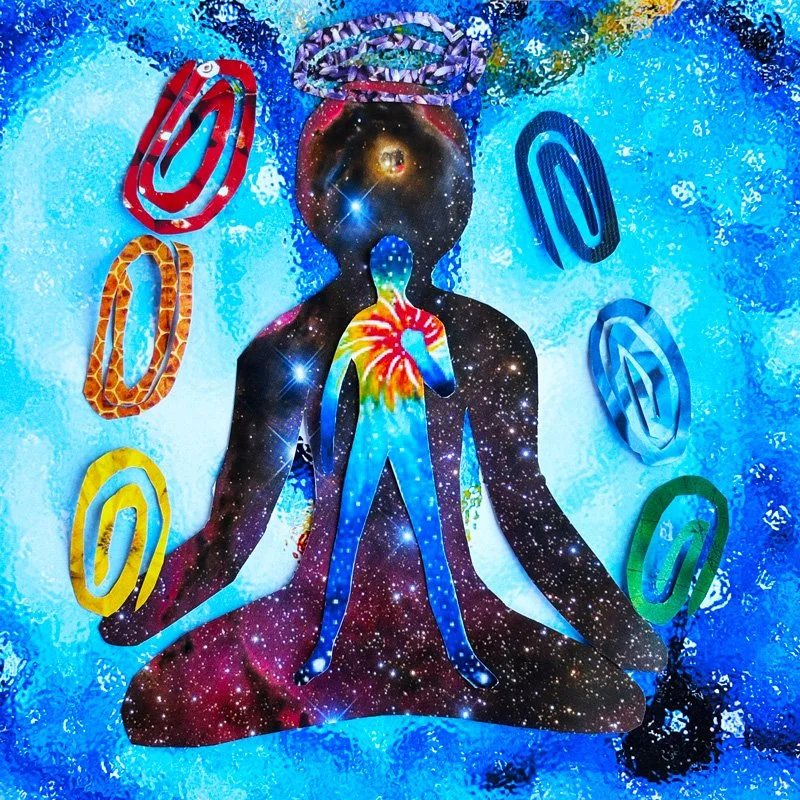
In an unbalanced world, how can we create and sustain a balanced writing practice? More to the point, how can a balanced writing practice help us lead more harmonious and fulfilling personal and professional lives?
In March 2026, I invited Michele DiPietro — a Professor of Mathematics and the Executive Director of the Center for Excellence in Teaching and Learning at Kennesaw State University — to discuss what it means to be a “balanced writer” and what it takes to get there.
In the first hour of this Special Event, Michele introduced their most recent book, The Faculty Guide to a Balanced and Harmonious Career, which provides a yogic framework for college educators to take inventory of areas of imbalance in their professional lives and work toward more sustainable and meaningful career alignment. In the second hour, we led a members-only workshop exploring how the seven chakras can be applied to the imbalances experienced not only by faculty writers but also by writers in any profession, genre, or career stage.
Here is WriteSPACE Event Manager Amy Lewis’ personal account of the live event.
……………
In this Special Event, we were invited to think about writing through an entirely different lens: the ancient framework of yoga philosophy and the seven chakras. What does it mean to write in alignment — with our values, our purpose, our body, and our community? This was a guiding question in the conversation with the wonderful Michele Di Pietro.
Michele explained that Chakras are energy centres in the body — or more precisely, in the energetic body, what yoga philosophy calls the subtle body. The most common framework identifies seven, running from the base of the spine to the crown of the head. Each one is associated with a domain of experience, a right, and a demon (the shadow force that can block or distort that energy):
The base of the spine — grounding; the right to be; the demon of fear
The pelvis — desire and pleasure; the right to feel; the demon of guilt
The belly — power and transformation; the right to act; the demon of shame
The heart — love and connection; the right to love; the demon of grief
The throat — truth and voice; the right to speak; the demon of lies
The third eye — vision and perception; the right to see; the demon of illusion
The crown — legacy and transcendence; the right to know; the demon of attachment
As academics, we tend to store most of our energy in our heads — leaving other centres depleted. The work of balance is not about achieving some fixed, static equilibrium, but about keeping all these energies in alignment with one another. As Michele put it, balance is less like a book sitting still on a table and more like a tight walker: you have to keep moving to stay upright (which is such a great image!)
So what does it mean to write in alignment? Michele described each chakra as a meeting point between Shakti (the energy of immanence, rising from below) and Shiva (the energy of transcendence, descending from above). When we write in alignment, our words reflect both: our values, desires, and power from below, and our purpose, vision, and love from above.
Michele explained that problems arise when we lose that thread. When we're writing just to get another publication, rather than about something we genuinely care about — that's the ground chakra unmoored from the crown. When burnout sets in, it shows up across multiple chakras at once: physical exhaustion (ground), loss of pleasure (pelvis), loss of agency (power), loss of purpose (crown). When the context around us isn't safe enough to speak our truth — that's the throat chakra blocked.
The throat is an important one for us academics. Out of all the rights associated with the seven chakras, one emerged overwhelmingly from Michele's research as the most challenged, the most undernourished: the right to speak. This was a very resonant part of the conversation, and Helen explained that the experience of being seen — of having someone listen and say, I hear you, I see you — is extraordinarily powerful. That is also, of course, what writing can do — both for the writer and the reader.
After our conversation, Michele led us through a series of writing exercises moving down the chakras. If you would like to try one of the prompts, grab a pen and paper and freewrite on the following:
Close your eyes and imagine a round table deep inside your creative mind. Three familiar figures take their seats:
The Annihilator — the harsh one who tells you your writing is worthless.
The Doubter — the hesitant one who second-guesses every choice.
The Realist — the practical one who warns you not to get your hopes up.
Suddenly, a new trio enters and sits across from them:
The Doer — who takes action step by step.
The Dreamer — who imagines without limits.
The Visionary — who sees the deeper purpose in what you're creating.
What does each inner critic say when given the chance to speak honestly — not to harm you, but to tell you what they're afraid of, what they're trying to protect you from? And how do the allies respond? What reassurance does the Doer offer? What small steps can move things forward? What hope or possibility does the Dreamer bring into the room? What long-view wisdom does the Visionary share that reframes everything?
A Few Things I'm Taking Away:
But first, two stand-out reminders from Michele:
"They can take all kinds of things from us, but they cannot take our breath."
"The obstacle is the path."
What struck me most in this conversation is that the chakra framework offers a great deal of richness for academic writers in particular: permission to slow down and simply breathe, to care about the body, to honour relationships, and to pursue work that is genuinely meaningful rather than merely productive.
Michele spoke movingly about the moment his project shifted from yes, I can to but I must — when, having gathered so many raw and generous stories from the people he interviewed, he felt a debt of responsibility to them. It was a great example of when the heart chakra meets the crown in academic work.
And his reminder that the obstacle is the path — that friction is not evidence of failure, but the necessary condition of making anything real — felt like exactly the kind of wisdom that a balanced writing practice (or a yoga practice, for that matter) can slowly teach us, if we let it.
A warm thank you to Michele and Helen for sharing their ideas. We look forward to seeing you at the next WriteSPACE Special Event!

WriteSPACE and WS Studio members can find the full recording of the two-hour Special Event in their Video library.
Not a member? Register to receive an email with a link to the video of the first hour.
Better yet! Join the WriteSPACE with a free 30 day trial, and access our full Library of videos and other writing resources as part of your membership plan.